A useful answer starts with scope
The cost of a professional website in 2026 can range from a focused four-figure project to a substantial five-figure or larger investment. That range is wide because “website” can mean a single campaign page, a service business website, a custom ecommerce store or a software product with accounts and integrations. Page count alone does not explain the difference.
A reliable estimate considers strategy, design depth, content readiness, functionality, platform, integrations, migration risk and the level of quality assurance required. Two websites with ten pages can have completely different costs if one uses a proven template and the other needs custom positioning, animation, a content model and CRM integration.
This guide gives practical ranges and explains what changes them. It is not a universal price list. Markets, specialists and project conditions vary. Use it to prepare a better brief, compare proposals fairly and decide where your budget will create the most business value.
Typical website development cost ranges
A focused landing page commonly sits at the lower end because it has one primary journey and limited content. A professional small-business website adds service pages, a CMS, reusable components, forms, analytics and broader responsive testing. Ecommerce introduces product templates, collections, merchandising and platform configuration. Custom platforms add application states, APIs, authentication and ongoing product decisions.
Broad planning ranges are useful before discovery:
- A professional landing page may begin around $1,000 to $3,000.
- A custom small-business or startup marketing website may range from $3,000 to $10,000.
- A content-rich or highly designed marketing website may range from $8,000 to $25,000 or more.
- A customized Shopify or ecommerce build may range from $5,000 to $30,000 or more.
- A custom React or Next.js application can begin around $10,000 and grow substantially with product complexity.
These are planning ranges, not quotes. Content, region, experience and risk change the final number. A clear discovery process should turn the range into defined deliverables and assumptions.
Strategy and discovery costs
Professional projects spend time understanding the problem before producing screens. Discovery may include stakeholder interviews, competitor review, audience definition, analytics review, content inventory and technical constraints. This work prevents a team from polishing the wrong structure.
Smaller projects may handle discovery through a workshop and concise brief. Larger websites need a documented sitemap, requirements, content ownership and integration plan. The fee reflects the uncertainty being reduced. When a project has unclear goals, every later design and development decision takes longer.
You can reduce discovery cost by preparing evidence: analytics, customer questions, current conversion data, sales feedback, brand guidelines and examples of websites you like. Do not prescribe a specific visual solution too early. Explain the business problem and let the designer or developer recommend the appropriate implementation.
Custom design versus templates
Templates reduce initial design effort by providing existing layouts and styles. They can be sensible for an early business with limited content and a need to launch quickly. The tradeoff is that the information architecture and brand expression must fit decisions made for a generic audience.
Custom design begins with your content, customer journey and identity. It usually costs more because important templates are designed across breakpoints and interaction states. The result can communicate a specialized offer more clearly and support a reusable system rather than a collection of unrelated pages.
Custom does not mean every element should be unique. Strong websites use consistent components. The value lies in choosing the right system and visual hierarchy for the business. Ask a provider which parts will be custom, which patterns will repeat and how future pages can be assembled after launch.
Content changes the budget
Content is frequently underestimated. A developer cannot build a clear service page from a service name and three bullet points without making strategic assumptions. Professional copy may require interviews, keyword research, messaging, editing and approval. Photography, illustration and video introduce separate production work.
If your team supplies content, define what “ready” means. Final text should be approved, images should have usage rights and data should be organized before the related templates are built. Late content changes can affect layout, navigation and component requirements.
Investing in content can improve conversion more than adding decorative animation. A useful homepage tells visitors who the service is for, which problem it solves, why the provider is credible and what action to take. Budget for that work rather than treating text as filler added at the end.
Platform choice and website cost
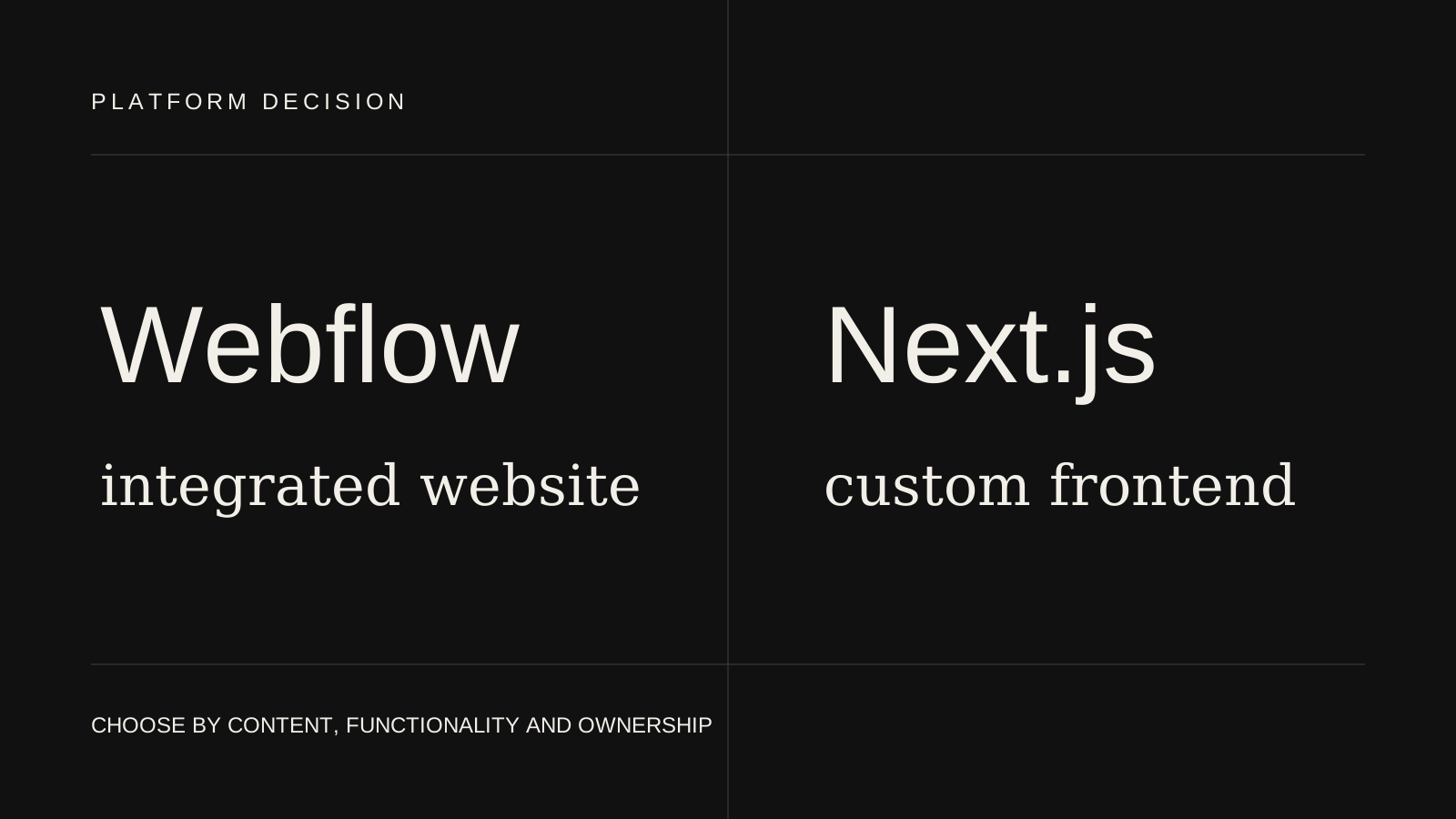
Platform selection affects development, hosting and long-term maintenance. Webflow can be efficient for design-led marketing sites with structured CMS content. WordPress is flexible for publishing and integrations, especially when the team already understands its administration. Shopify is usually the practical choice for standard ecommerce operations. Next.js suits businesses that need custom functionality, strong performance and flexible integrations.
The cheapest platform is not the one with the lowest subscription. It is the one that meets requirements without excessive customization or operational burden. A custom framework is wasteful when a managed platform already solves the problem. A page builder becomes expensive when the required behavior fights its model on every template.
Discuss who will publish content, who will maintain updates, which systems must connect and what the roadmap includes. My service pages explain the practical differences between Next.js development, Webflow development, Shopify development and WordPress development.
Functionality and integrations
Forms, booking, payments, member accounts, search, filtering, localization and calculators each add states that must be designed, developed and tested. Integrations add dependency on external APIs, permissions and data quality. “Connect to the CRM” may involve field mapping, consent, duplicate handling, error states and attribution.
Ask what happens when an integration is unavailable or returns incomplete data. Robust projects design those conditions instead of assuming every request succeeds. Ecommerce also needs careful handling of product variants, shipping rules, tax, discounts and transaction emails.
Provide a list of required integrations during estimation and separate essential launch features from later enhancements. This makes proposals comparable and protects the budget from features that are useful but not necessary for the first release.
SEO and performance investment
Technical SEO should not be sold as a mysterious add-on after development. Semantic headings, crawlable navigation, metadata, canonicals, redirects, sitemap generation, structured data and image handling belong in the build. Content strategy and authority development are separate ongoing disciplines.
Performance work includes more than compressing a few images. It may require font decisions, component boundaries, script review, caching, server configuration and measurement. The Next.js production checklist highlights images, scripts, metadata, accessibility and Core Web Vitals as production considerations.
A cheaper proposal may omit migration planning or validation. That omission can be costly if existing rankings decline. When replacing a live website, request a URL map, redirect plan, analytics verification and post-launch crawl review.
Who you hire affects price
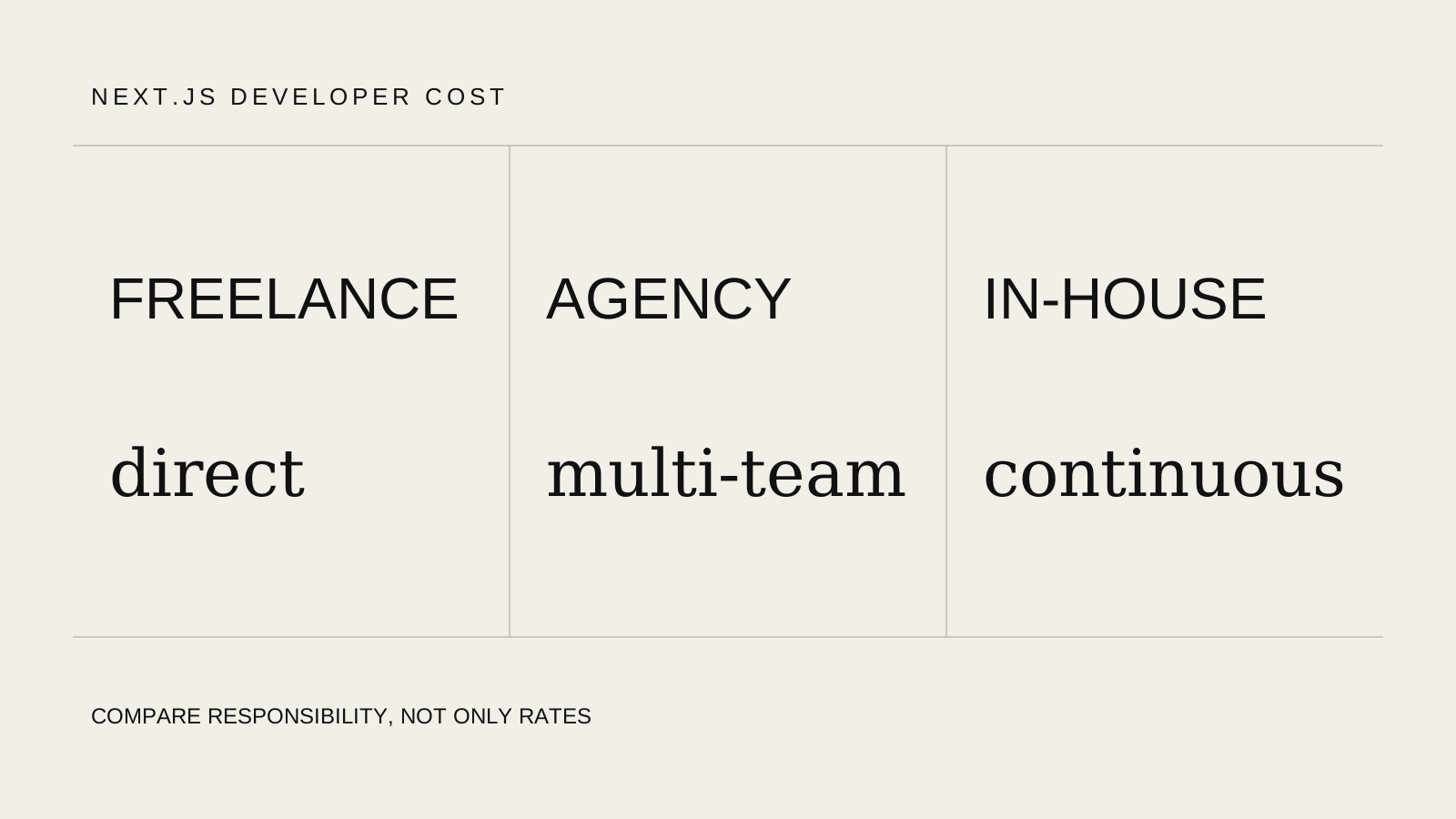
Freelancers, small studios and agencies offer different structures. A freelancer provides direct communication and may be efficient when one experienced person can cover the work. A studio adds specialized design or content support. An agency offers broader capacity, management and redundancy, with additional overhead.
The correct choice depends on scope and risk, not status. A complex brand launch may need a team. A focused development engagement may benefit from direct access to the person writing the code. Evaluate relevant work, communication, process and the clarity of the proposal.
When you hire a freelance web developer, ask what is included in responsive behavior, CMS setup, content entry, analytics, SEO, browser testing, deployment and support. Review the GrowthMaze Webflow case study to see how a platform-specific project is documented. A low headline price may exclude work you assumed was standard.
Ongoing costs after launch
The project fee is not the total cost of ownership. Budget for hosting, domain renewal, platform subscriptions, premium apps, monitoring, backups, security updates and ongoing content. Ecommerce stores may have payment and app fees. WordPress sites require plugin and core maintenance. Custom applications need dependency updates and operational monitoring.
Maintenance does not need to be an expensive retainer. A stable marketing website may need scheduled reviews and occasional improvements. An active product or store benefits from continuous measurement and iteration. Agree on response times, ownership and how small requests will be priced.
Also budget for growth. New case studies, landing pages and articles should be easy to publish. If every update requires reconstructing a page manually, the initial implementation has created an avoidable operating cost.
How to compare website proposals
Compare scope before price. One proposal may include copywriting, custom design, migration and post-launch support while another covers development only. Look for named deliverables, assumptions, revision boundaries, timeline, payment schedule and ownership.
A strong proposal explains the platform recommendation and major exclusions. It should state who supplies content, how feedback works and what constitutes acceptance. Technical language should clarify risk, not hide it.
Ask for a walkthrough if two proposals seem difficult to compare. The provider should be able to explain where time is being spent. Avoid selecting purely on an impressive list of technologies; the architecture should match the business problem.
How to control cost without lowering quality
Reduce scope before reducing quality. Launching five strong pages is better than launching twenty unfinished pages. Use a reusable system, prioritize one conversion journey and defer nonessential integrations. Prepare content and feedback owners early so the project does not pause between stages.
Choose a platform that gives your team appropriate control. Avoid custom development for features a stable platform already handles. At the same time, do not force specialized requirements into a tool that will need constant workarounds.
Set a realistic decision process. Consolidated feedback from one responsible owner prevents repeated changes. Agree on measurable priorities such as qualified inquiries, trial starts or product discovery. Those priorities help the team decide which details deserve investment.
Preparing for an accurate estimate
Before contacting a developer, write a short brief covering the business, audience, primary goal, required pages, integrations, content status, examples and desired launch window. Include a budget range. A range helps the provider recommend an appropriate approach rather than designing a plan that cannot be funded.
Share access to analytics or the current site when possible. Identify pages that already attract traffic and content that must be preserved. List legal, accessibility or localization constraints. Clarify whether brand design already exists.
You do not need a perfect specification. Discovery exists to resolve uncertainty. You do need enough context for the developer to distinguish a simple brochure website from a platform with hidden operational requirements. To get a scoped recommendation, contact me about your website project.
Frequently asked questions
How much should a small business website cost?
A custom small-business website often falls between $3,000 and $10,000, but content, design, integrations and market conditions can move the figure. A template-led site may cost less, while specialized functionality costs more.
Why do agency and freelancer prices differ?
Agencies include multiple specialists, project management and operational overhead. Freelancers may provide more direct and efficient delivery for focused scopes. Neither structure is automatically better; compare capability, process and included work.
Should I publish my budget?
Sharing a realistic range helps a developer propose the right scope and platform. It does not remove the need for a transparent estimate. Ask how the recommendation changes at different budget levels.
Is website maintenance included in development cost?
Sometimes. The proposal should state the warranty period, ongoing support, platform fees and response expectations. Maintenance is often priced separately so the business can choose the right level.
Can I start small and expand later?
Yes. A phased approach works well when the first release uses reusable components, clean content models and a platform suited to the roadmap. Define likely future needs during discovery so the foundation does not block them.