A startup does not need a React website because it is a technology company. It needs the platform that lets the team explain the product, publish changes and support the next stage without creating unnecessary operational work.
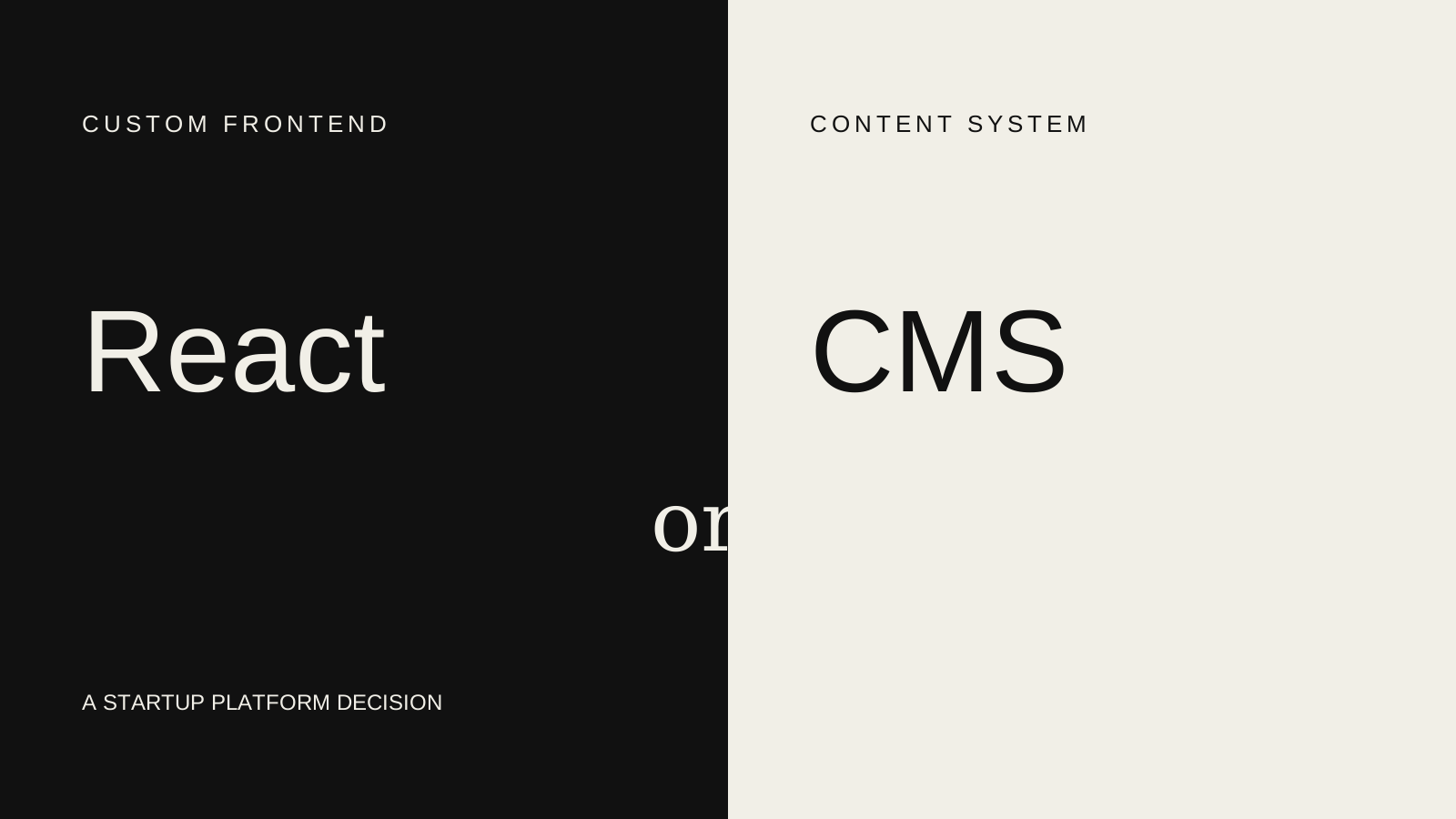
React is valuable when the website contains genuine application behaviour or must share an interface system with a product. A traditional CMS is often better when the immediate job is publishing content, testing positioning and giving a small marketing team direct control.
The useful comparison is not “modern code versus old software.” It is custom engineering versus a content-focused operating model.
Define what the startup website must do now
Early-stage websites often have three jobs: explain the problem, demonstrate credibility and move the right visitor toward a conversation or signup. Those jobs do not automatically require a custom React application.
List the launch requirements:
- Core marketing pages
- Product or feature explanations
- Articles, changelog or documentation
- Lead forms or account signup
- Interactive demos or calculators
- Authentication or personalised content
- CMS publishing and preview
- Analytics and campaign landing pages
Separate launch requirements from future possibilities. Building for every imagined feature can slow the launch and create maintenance before demand is proven.
What “a React website” actually means
React is a library for component-based interfaces. A production public website also needs routing, metadata, rendering, image handling and deployment conventions. In practice, many businesses use React through a framework such as Next.js rather than assembling those concerns independently.
The React advantage is control. Developers can create custom states, connect APIs and reuse interface patterns across marketing and product areas. The cost is that the startup owns more engineering decisions and requires developers for more structural changes.
If custom interaction is central to the brief, review the React development service for the types of interfaces, integrations and component systems involved.
What a traditional CMS provides
A traditional CMS combines content management and page delivery. WordPress is the clearest example, while visual platforms such as Webflow serve a similar marketing-site need through a different operating model.
The advantage is editorial familiarity. Teams can publish pages, articles and routine updates without a custom frontend deployment. Themes, plugins and established integrations may shorten delivery.
The cost is constraint and dependency. A theme may not support an unusual product experience. Plugins can overlap, age or introduce maintenance. Flexible page builders can allow design quality to drift when every editor can change structure.
Choose React when custom behaviour is the product story
A React-based approach is justified when visitors need to interact with the product rather than only read about it.
Examples include:
- A working product demonstration embedded in marketing pages
- A pricing or configuration tool with complex state
- A customer portal connected to the same design system
- Live data from product APIs
- Personalised account content
- A marketplace or searchable product catalogue with custom behaviour
The 20 Car Rental React case study records responsive React work around vehicle discovery and a booking-oriented journey. It demonstrates relevant frontend scope without claiming private business results.
Choose a CMS when publishing speed is the constraint
A CMS is usually the better starting point when the website consists primarily of structured marketing content and the team needs to edit it frequently without engineering support.
Examples include:
- An early startup refining positioning each week
- A service marketplace validating demand before custom platform development
- A founder-led company publishing articles and case studies
- A small team with no developer responsible for ongoing releases
- A launch where custom interaction is not required
The CMS should still use controlled page patterns. Faster editing is not valuable if every new page breaks hierarchy, responsive behaviour or brand consistency.
Compare the real cost, not the launch quote
Custom React work can cost more initially because routing, content integration, components and deployment must be implemented for the project. A CMS may launch faster through existing conventions.
Long-term cost depends on how the site changes. A startup that constantly requests custom CMS workarounds may eventually spend more than it would on a suitable frontend. A React website that needs a developer for every text layout may create unnecessary operating cost.
Compare:
- Initial implementation
- Content migration
- Hosting and licences
- Developer dependence for new pages
- Plugin or dependency maintenance
- Integration changes
- Security and backups
- Redesign and component reuse
There is no universally cheaper platform. There is only a better match for the expected work.
Editing workflow is a product requirement
Ask who will create a landing page on a Tuesday afternoon. If the answer is a marketer, define which sections they can combine and which styles remain controlled. If the answer is a developer, confirm that release capacity exists.
A headless CMS connected to React can provide structured editing, but it introduces preview, deployment and integration decisions. Do not select headless architecture simply to claim flexibility. Test the editor experience with the actual team.
The startup website development service focuses on positioning, responsive implementation, reusable content and a practical launch foundation rather than forcing every startup into one technology.
SEO differences are mostly implementation differences
React content can be search-friendly when rendered appropriately and supported by semantic HTML, metadata, internal links and crawlable routes. A browser-only application needs more care for public marketing content. Frameworks such as Next.js provide useful rendering and metadata conventions.
CMS platforms can also rank well. Their common problems usually come from poor themes, uncontrolled plugins, duplicate archives or weak content structure rather than the CMS name itself.
Do not accept “React is bad for SEO” or “WordPress ranks better” as complete explanations. Ask how important content reaches the initial HTML, how metadata is maintained and how editors create internally linked pages.
A hybrid approach may be the best answer
The marketing website and the application do not have to use the same platform. A startup can run a CMS-driven marketing site alongside a React product. This lets marketers publish independently while the product team maintains application-specific architecture.
The tradeoff is duplicated design systems, analytics and navigation unless ownership is coordinated. A shared component system is useful only if both teams can release it without creating dependency bottlenecks.
Hybrid architecture is a deliberate operating decision, not a temporary embarrassment.
A practical decision checklist
Choose a React-based website when most of these are true:
- Custom interaction is required at launch
- APIs and application data are central
- Developers will maintain the frontend
- Shared product components have real value
- The roadmap includes functionality beyond content pages
Choose a traditional CMS when most of these are true:
- Content and positioning will change frequently
- Nontechnical editors need direct control
- Standard page and form patterns meet the requirement
- Launch speed matters more than custom behaviour
- The team wants fewer custom deployment responsibilities
Conclusion
For a startup, the best platform is the one that reduces the current bottleneck without blocking the next credible stage. React earns its cost through custom behaviour and reusable application architecture. A CMS earns its place through editorial independence and established content workflows. The broader React vs Next.js business guide can help when the decision is between a React application and a React framework.
If you are choosing a foundation, explore startup website development, review custom React development, or share the launch brief for a platform recommendation.
Frequently asked questions
Is React too expensive for an early-stage startup?
It can be unnecessary if the website is primarily standard marketing content. It becomes reasonable when custom interaction, API integration or shared product architecture creates clear value.
Can a startup begin with WordPress or Webflow and migrate later?
Yes. Preserve logical URLs, structured content and clean ownership so a future migration is easier. Do not overbuild the first platform for a roadmap that may change.
Does a React website require a headless CMS?
No. Content can come from local files, a headless CMS or another system. Choose according to publishing frequency, preview needs and editor ownership.
Should the marketing site and product use the same frontend?
Only when shared architecture reduces real work. Separate systems may give marketing and product teams more operational independence.